


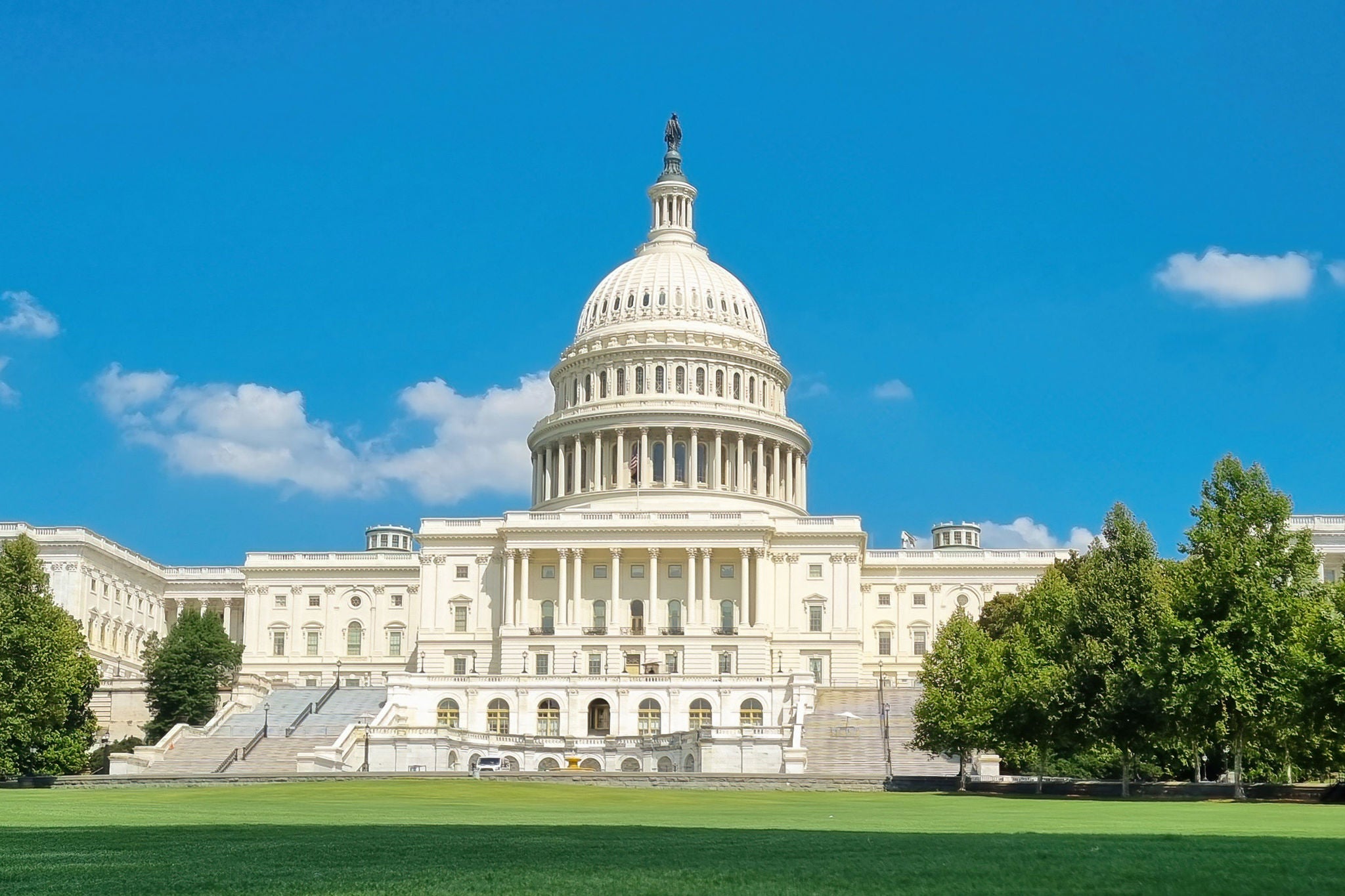








Front view of the Senate at Capitol Hill

President Trump’s second administration at the one-year mark

Related topics

Trump’s administration has ushered in significant shifts to every corner of US policy, and the 2026 landscape remains poised for change.


In brief
  • Many of the changes to date have been driven through executive actions; in the first year of his administration, Trump signed nearly 230 executive orders (EOs).
  • On the legislative front, the president’s key accomplishment was passage of his One Big Beautiful Bill Act (OBBBA).
  • The economy, ongoing trade conflicts and broader geopolitical uncertainties will continue to impact the incoming administration’s agenda.

President Donald Trump was inaugurated for his second term on January 20, 2025, and in only one year, the shifts in US policy have been dramatic, spanning trade and industrial policy, including a wave of new tariffs; a deregulatory push; a new approach to artificial intelligence (AI) and energy policy; and a significant reshaping of the role of the federal government.

Trump administration at the one-year mark – download now

Many of the changes to date have been driven through executive actions; in the first year of his administration, Trump signed nearly 230 executive orders (EOs). This represents the largest first-year total in nearly a century and more than Trump signed in his entire first term.1  The EOs span a wide range of policy actions aimed at addressing tariffs, the size of the federal workforce, immigration, deregulation priorities, and competitiveness and innovation, among others.

Over the same period, hundreds of legal challenges have been filed to slow or stop certain executive actions. A historic government shutdown also closed federal agencies for 43 days and temporarily stalled the implementation of the administration’s deregulatory agenda for most agencies.

On the legislative front, the president’s key accomplishment was passage of his One Big Beautiful Bill Act (OBBBA). Congress also passed the first federal law providing a legal framework for stablecoins, another key focus area for the president.

This publication explores many of the key actions taken by the second Trump administration during its first year on seven key policy issues and considers what’s next in 2026.

By the numbers: first year of President Trump's second term


Key issues

Stacked shipping containers in port
1

Trade and industrial policy

Trump’s second term has been marked by a sweeping overhaul of US trade policy.

Trump’s second term has been marked by a sweeping overhaul of US trade policy, driven by the administration’s desire to revive US manufacturing and reshore jobs, address what it perceives as global trade imbalances and strengthen national security. Trade negotiations and tariff levels remain fluid, although the US average tariff rate currently is far below its peak in April 2025. 


The Trump administration also has taken a reinvigorated approach to US industrial policy — often prompting US companies across several sectors to reshape corporate strategies. Policy changes also have created some additional uncertainty as the US renegotiates trading terms with dozens of governments, and corporate dealmaking adjusts to a new paradigm where in some instances the Trump administration is at the negotiating table alongside them.

Washington DC, USA skyline on the Potomac River at night.
2

Regulatory landscape

Deregulation has been another prominent priority of the Trump presidency.

Deregulation has been another prominent priority of the Trump presidency. As a part of this goal, in 2025, Trump directed agencies to eliminate restrictive and costly regulations and streamline rulemaking agendas to align with White House priorities, including efforts to reduce compliance costs, embrace innovation and spur economic growth. 

A close up of a computer chip with many blue and black lines. Concept of complexity and sophistication, as well as the intricate nature of modern technology
3

Technology

US-China competition and the promotion of US technology are key drivers of the president’s technology agenda, including a focus on US AI leadership.

US-China competition and the promotion of US technology are key drivers of the president’s technology agenda. One consistent element has been the administration’s focus on US AI leadership, with Trump harnessing energy, trade, infrastructure and other policy initiatives to speed AI development and deployment. Another hallmark of the president’s approach has been private sector involvement in spurring innovation, including through public-private partnerships, advisory boards and councils. The administration’s industrial policy approach also has increased US government intervention in AI-related private sector ecosystems.

Bitcoin BTC Cryptocurrency Capital Gains Money Markets Finance Hedge Fund
4

Digital assets

Trump has been a strong ally of the digital assets sector, signaling support via several executive actions, engagement with the business community and pro-crypto appointments.

Trump has been a strong ally of the digital assets sector, signaling support via several executive actions, engagement with the business community and pro-crypto appointments. His approach has focused on private sector involvement, regulatory clarity, innovation and US global leadership.

Congress followed the administration’s lead and passed one of the few bipartisan pieces of legislation of 2025 – the GENIUS Act. This historic measure established a legal framework for stablecoin.

Tax concept. Person filling personal income tax return to pay taxes online
5

Tax

The unified Republican Congress and White House led to passage of significant tax legislation in 2025, including the One Big Beautiful Bill Act (OBBBA).

The unified Republican Congress and White House led to passage of significant tax legislation in 2025. The OBBBA dominated the legislative calendar in the first half of 2025 and culminated with the president signing the bill into law on July 4, marking the signature legislative achievement of his first year back in office.

Numerous professionals are walking through a spacious office lobby during a sunny afternoon, showcasing an active environment filled with movement and energy.
6

Workforce

Rollbacks of diversity, equity and inclusion (DEI) policies, tightening of immigration policies and federal workforce reductions have been central to Trump’s second-term policy approach.

Rollbacks of diversity, equity and inclusion (DEI) policies, tightening of immigration policies and federal workforce reductions have been central to Trump’s second-term policy approach to workforce policy issues. The cumulative effects of these changes are reverberating through the business community, and tensions are expected to persist in the months ahead.

Modern new power station. The equipment used to raise or lower voltage, high voltage power station. Electrical Transformer
7

Energy

Energy policy under the Trump administration has shifted strongly toward deregulation and traditional production, while scaling back and delaying clean energy mandates.

Energy policy under the Trump administration has shifted strongly toward deregulation and traditional production, while scaling back and delaying clean energy mandates. These efforts have focused on improving domestic energy supply chains and incentivizing investments in infrastructure. Energy is also a major component of Trump’s international economic agenda, with a strong emphasis on facilitating the export of American energy and securing energy investments from US trading partners.

Conclusion

Trump’s administration has ushered in significant shifts to every corner of US policy. The volume of executive actions launched thus far represents a historical high-water mark and shows little sign of ebbing. The public policy landscape in 2026 and beyond remains poised for change. Deregulatory efforts, trade issues and technology developments in particular bear watching.


Summary

With the midterm elections looming large on the horizon, expect the president to continue to urge Congress forward on his legislative priorities; a change in majority in either chamber of Congress next year would bring the president’s legislative agenda to a halt and put an even bigger spotlight onhis broad executive agenda. The policy environment will also continue to be shaped by state governments’ responses to the president’s actions, as well as court challenges and decisions. And of course, the economy, ongoing trade conflicts and broader geopolitical uncertainties will continue to impact the incoming administration’s agenda in unforeseen ways.

About this article

Authors

Related articles

A look ahead: President Donald Trump’s second term

A look ahead: President Donald Trump’s second term

US public policy spotlight: the AI landscape in the states

US public policy spotlight: the AI landscape in the states. What you need to know.

2026 Global Economic Outlook: growth slows amid supply shocks

2026 Global Economic Outlook: global growth will slow as supply shocks, trade tensions and policy uncertainty intensify. Explore our latest outlook.